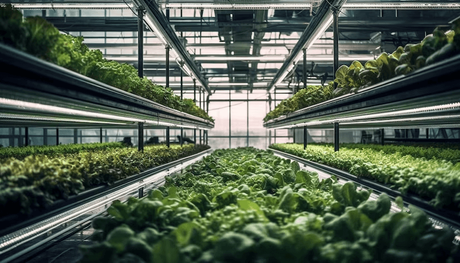
In the evolving landscape of modern cannabis cultivation, few innovations have reshaped production efficiency as dramatically as the vertical grow rack system. By stacking crops upward rather than outward, growers have learned to turn limited square footage into multi-tiered ecosystems of light, airflow, and precise irrigation. Yet with this vertical evolution comes a challenge that even the most advanced growers must continually refine — managing moisture and drainage.
Moisture management in a cannabis vertical farming environment is both an art and a science. It's not just about ensuring plants get enough water; it's about maintaining a balanced microclimate on every tier, ensuring that each layer of the indoor cannabis grow system functions like a miniature ecosystem — self-contained, efficient, and harmonious. Too much moisture, and you invite disease, root rot, and mildew. Too little, and your plants wither before they ever express their full genetic potential.
The solution lies in understanding how water behaves within a vertical space — how it moves through the substrate, how it evaporates into the air, and how it affects the root, stem, and canopy in each zone. Managing these dynamics requires more than technical equipment; it demands intuition, patience, and constant observation.
The Living System Behind the Racks
When you first step into a vertical grow room, the structure itself seems like an emblem of control. Every tier is carefully engineered: LEDs overhead, trays beneath, and a well-calibrated irrigation network connecting each level. But beneath that precision lies an organic system that resists uniformity. Each tray experiences slightly different conditions. The top tier receives warmer, drier air from the lights above; the lower tiers remain cooler and more humid due to proximity to drainage lines and limited airflow.
In a vertical grow rack system, this vertical gradient of temperature and humidity can become a silent disruptor. Moisture rises, heat accumulates, and the balance shifts from one tier to another. The goal isn't to force uniformity but to manage diversity — to fine-tune water and air so that each plant receives what it needs, regardless of height or position.
When growers talk about moisture management, they often default to irrigation — the delivery of water. But in a vertical setup, the more critical question is where the water goes afterward. Every droplet must find its path: absorbed by roots, evaporated into air, or drained away cleanly. Poor drainage can turn the lower levels into a swamp of standing water, breeding pathogens that quickly spread upward through shared airflow.
Understanding Moisture in Vertical Spaces
Moisture behaves differently in vertical systems than in traditional horizontal grow rooms. When water is applied from above — whether through drip emitters, ebb-and-flow trays, or misting — gravity instantly becomes a player. Water naturally moves downward, carrying nutrients, salts, and sometimes pathogens with it. If the indoor cannabis grow system isn't designed with adequate drainage slopes or catchment trays, lower racks become collection points for excess runoff.
This is why cannabis vertical farming systems demand meticulous engineering. It's not just about stacking more plants; it's about rethinking how water flows through three-dimensional space. Each tier needs its own identity — its own irrigation rhythm, its own drainage control, and its own environmental monitoring. The best growers learn to see the room as a living structure rather than a fixed design.
When humidity levels fluctuate between tiers, plants react accordingly. The upper levels, exposed to greater light intensity, tend to transpire faster, drawing more water from the substrate. Lower levels, shaded by the tiers above, transpire more slowly but remain surrounded by higher relative humidity. Without compensation, these conditions create inconsistent moisture availability across the racks — one tray dry, the next damp. That inconsistency, over time, translates into uneven growth and unpredictable yields.
The Hidden Power of Drainage Design
Drainage is often treated as a technical afterthought — a matter of fitting trays with a few outlet holes and letting gravity do the rest. But in a vertical grow rack system, drainage is architecture. The efficiency of your drainage determines how oxygenated your root zones remain, how salts accumulate (or don't), and how quickly your substrate resets between irrigation cycles.
Good drainage begins with slope. Each tier of your rack should have a slight angle — even half a degree makes a difference — guiding water toward collection points. Those collection points must be connected to independent lines, not shared with upper tiers. If multiple layers share a single drain, nutrient runoff can backflow, carrying pathogens or altering the chemical balance in lower trays.
In a well-calibrated indoor cannabis grow system, drainage is dynamic. It doesn't simply remove water; it regulates the entire hydro-cycle. You can often tell a healthy vertical grow by listening — a soft trickle after irrigation, followed by silence as the room rebalances. In contrast, a grow room that smells stagnant or feels muggy long after watering has a drainage problem waiting to surface.
The choice of substrate also interacts closely with drainage. Coco coir, rockwool, and soilless blends each handle moisture differently. Rockwool drains quickly but holds air poorly when oversaturated; coco retains moisture longer but can lead to salt accumulation if not flushed properly. When combined with vertical layouts, even these small substrate differences become magnified. That's why many experienced vertical growers standardize their media type across tiers — consistency makes moisture prediction easier.
Air, Water, and the Vertical Microclimate
Managing moisture isn't just about liquid water — it's equally about vapor. The invisible humidity that circulates through a cannabis vertical farming setup is what connects every rack in the system. Airflow becomes the unseen irrigation system of the room.
In a vertical environment, air doesn't move naturally the way it does in open greenhouses. Warm air rises from lighting fixtures, while cooler, humid air pools near the floor. If left uncorrected, this stratification can cause the top racks to dry too quickly and the bottom racks to stay perpetually damp. Both extremes stress plants and promote uneven transpiration.
The solution is to design airflow as deliberately as irrigation. Many advanced growers now install horizontal air tubes or under-canopy fans at each tier, ensuring that every layer breathes independently. It's not enough to circulate air through the room; it must circulate through each level.
Dehumidifiers also play a decisive role. In indoor cannabis grow systems, water applied during irrigation returns to the air through transpiration. A mature vertical grow room can release hundreds of liters of water vapor daily, and without proper dehumidification, that vapor condenses on ceilings, lights, and even the undersides of upper trays. This condensation drips unpredictably, disrupting irrigation schedules and spreading contaminants.
By positioning dehumidifiers at alternating heights and coupling them with directional airflow, growers can prevent such accumulation. The aim is not to eliminate humidity but to stabilize it — to keep it within the narrow comfort range where stomata remain open, transpiration continues smoothly, and photosynthesis operates efficiently.
The Relationship Between Moisture and Plant Physiology
In any indoor cannabis grow system, the relationship between moisture and plant physiology is intimate. Cannabis plants, particularly in the flowering phase, rely on consistent root-zone oxygenation to maintain nutrient uptake. When roots sit in oversaturated substrate, they suffocate. When they experience drought, nutrient flow halts.
In vertical configurations, this tension between saturation and dryness plays out on multiple levels. Because water moves downward naturally, lower tiers often experience longer periods of dampness, while upper tiers dry more rapidly. This difference changes root oxygen availability, nutrient solubility, and even microbial populations.
If moisture imbalance persists, it leads to visible canopy effects: the lower plants show signs of nutrient lockout, the upper ones exhibit calcium deficiency or stress curling. Many growers initially misdiagnose these symptoms as feeding issues, when the true culprit lies in the uneven hydrodynamics of their rack system.
One advanced solution is tier-specific irrigation programming. With modern sensors and automated controllers, you can assign different watering schedules to each level. Upper racks might receive longer, less frequent cycles, while lower racks receive shorter, more frequent bursts to counterbalance environmental humidity. The best cannabis vertical farming setups treat each tier as its own biome, coordinated yet autonomous.
Lessons from Field to Rack
Traditional horizontal cultivation has taught growers to manage irrigation by feel — a finger pressed into soil, a glance at leaf turgor. But in vertical systems, intuition must be paired with data. Sensors embedded in trays now measure volumetric water content, root-zone temperature, and electrical conductivity in real time. Yet the best growers still walk the aisles, lifting pots, touching leaves, and reading subtle signs that no sensor can translate.
Moisture management, after all, isn't just about technology. It's about rhythm. Every vertical grow rack system has its pulse — a cadence of watering, draining, drying, and rehydrating that defines its success. Too fast, and plants never stabilize; too slow, and roots drown. Finding that tempo takes weeks of observation and adjustment.
Drainage, meanwhile, reveals character. A grower who maintains clean, odor-free drains and clear runoff lines will always produce healthier roots. Those who neglect drainage — letting nutrient sludge or algae build up — eventually battle root rot and airborne spores. The connection is direct, immediate, and unforgiving.
Integrating Water Recovery and Sustainability
One of the most exciting frontiers in cannabis vertical farming is water recovery — capturing and reusing drainage runoff in closed-loop systems. With careful filtration and sterilization, up to 80% of irrigation water can be reclaimed, reducing both cost and environmental footprint.
However, this sustainability effort introduces its own complexity. Reused water carries dissolved salts and organic residues that must be filtered before reapplication. Ultraviolet sterilization, ozone treatment, and reverse osmosis units are now standard components in advanced indoor cannabis grow systems.
When properly implemented, these systems not only conserve water but stabilize nutrient balance across tiers. Instead of dumping runoff, growers can analyze it — understanding exactly how much nutrient solution each layer consumes. This feedback loop transforms moisture management from a reactive task into a predictive science.
Preventing Common Drainage and Moisture Issues
Every vertical grower eventually faces challenges. The most common? Root-zone oversaturation in lower tiers. The solution often begins with spacing. Crowded racks restrict airflow, trapping humidity beneath the canopy. By allowing slightly more vertical clearance between tiers, moisture can dissipate evenly.
Another issue is condensation under trays. This happens when cold drainage water meets warm ambient air. Insulating the drainage lines or maintaining a consistent room temperature minimizes this.
Finally, nutrient precipitation — when salts crystallize on tray surfaces — is a silent warning sign. It indicates uneven drying between irrigations. Gentle air movement, consistent irrigation timing, and proper slope correction usually restore balance.
The best growers treat these issues as teachers, not failures. Every drip and dry patch tells a story about the room's equilibrium.
The Emotional Dimension of Control
Managing moisture and drainage can sometimes feel like micromanaging chaos. Yet within that control lies a deeper relationship between grower and plant. Water, after all, is the medium through which life flows — carrying nutrients, energy, and breath. In a vertical grow rack system, your job isn't just to move water but to choreograph it — to let it nourish without suffocating, to flow without flooding.
Over time, successful growers develop intuition. They can sense by smell when humidity rises too high. They hear the subtle change in air tone when fans slow down. They recognize the way leaves angle slightly upward when moisture is just right. These sensory cues become the unspoken language of cultivation — a connection that transcends instruments and monitors.
From Drainage to Yield
Ultimately, every decision about moisture and drainage shows itself in yield. Well-drained, evenly hydrated plants produce denser buds, higher terpene concentration, and consistent cannabinoid profiles. Poorly managed rooms, no matter how advanced their lighting or genetics, deliver erratic results.
In vertical setups, that difference compounds. Because each rack amplifies the potential yield per square foot, a small drainage improvement multiplies across tiers. A single irrigation adjustment can raise overall productivity by double digits. The economics of cannabis vertical farming reward precision — not extravagance, but balance.
What many forget is that drainage is freedom. When your system drains cleanly, you can water confidently. You can push feeding schedules, test new media, or experiment with airflow — knowing the foundation beneath your plants is sound. Drainage is what allows creativity to flourish in controlled cultivation.
Building for the Future
The future of indoor cannabis grow systems is vertical — not just in structure but in thinking. Verticality teaches us to see growth as layered, interconnected, and dynamic. Water flows from top to bottom, but knowledge flows in every direction. Growers learn from engineers, engineers learn from cultivators, and together they design systems that blur the line between nature and technology.
Moisture management, in this context, becomes a philosophy of balance. It's about understanding that every drop has a destination, every bit of humidity has a purpose, and every drain has a story. The growers who master this will define the next generation of sustainable cannabis cultivation — systems that feed themselves, breathe naturally, and waste nothing.
A Closing Reflection
When you stand in the middle of a fully operational vertical grow rack system, surrounded by the rhythmic hum of fans and the faint scent of resin in bloom, it's easy to forget how fragile the balance truly is. Behind the glow of LEDs and the hum of pumps, life unfolds quietly — roots reaching for air, leaves sipping light, water rising and falling like breath.
Managing moisture and drainage is not just maintenance; it's cultivation in its purest form. It's the invisible architecture that supports every gram of flower harvested and every molecule of aroma released. In vertical growing, control doesn't mean domination — it means harmony. You're not fighting against nature; you're guiding it through an engineered sky.
And if you listen closely, you'll realize the plants are telling you everything you need to know. The shimmer on a leaf, the rhythm of the drips, the stillness of air after a perfect watering — these are the true metrics of success in vertical cannabis cultivation.
Whether you're fine-tuning your first indoor cannabis grow system or operating a full-scale cannabis vertical farming facility, remember that the essence of growing remains simple: give water the respect it deserves. For in mastering the movement of moisture, you master the life of the plant.
 English